
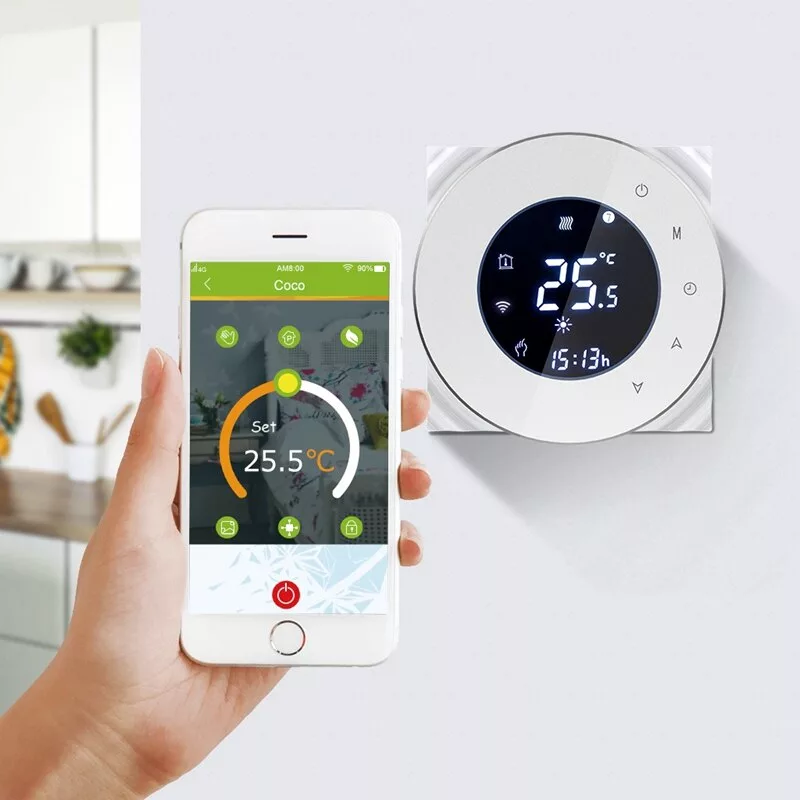
Most homeowners don’t realize how much control their thermostat has over energy costs and daily comfort. More than half of U.S. households still rely on outdated thermostats, either manual or early programmable models that offer only limited flexibility. These devices often waste energy, force HVAC systems to run inefficiently, and make homeowners choose between high utility bills and an uncomfortable home.
By contrast, a modern Wi-Fi thermostat St. Tammany homeowners are increasingly adopting provides remote access, real-time reporting, adaptive learning, and seamless integration with smart home platforms.
This in-depth guide explores the differences between Wi-Fi and programmable thermostats, the key features that make them smarter, the savings they provide, installation best practices, environmental impacts, and the advanced integrations that make them one of the most powerful HVAC control upgrades available.

Understanding What a Wi-Fi Thermostat Is
A Wi-Fi thermostat is an internet-connected climate control device that links to your home network. Unlike traditional programmable thermostats, which rely solely on fixed schedules, Wi-Fi thermostats allow adjustments from anywhere through smartphone apps or web dashboards.
If you leave for work and forget to lower the heat, you can fix it instantly on your phone. If you are returning early from vacation, you can warm your home in advance so it feels comfortable when you walk in.
The convenience of remote access is only part of the story. Modern Wi-Fi thermostats are designed to integrate with sensors, weather forecasts, and even your phone’s location. They can pre-cool or pre-heat based on occupancy patterns and use algorithms to anticipate your preferences. This makes them fundamentally different from programmable thermostats that rely entirely on user input.
Key Features That Define Wi-Fi Thermostats
The smart thermostat benefits homeowners appreciate most come from three categories: control, automation, and insights.
Remote control is the most obvious advantage. With a Wi-Fi connection and an app, you can adjust the temperature from work, from bed, or even from another state. This eliminates waste when the home is empty and ensures comfort on return.
Automation is the second major benefit. Many Wi-Fi thermostats use occupancy sensors, geofencing linked to your smartphone, and adaptive learning algorithms to create efficient schedules. Instead of requiring constant manual changes, the thermostat studies your daily routine. Over time, it anticipates when to heat or cool the home.
The third feature, reporting, provides a window into energy use. Many models offer detailed charts showing hourly, daily, and monthly patterns. By reviewing this data, homeowners can see when spikes occur, adjust habits, and measure progress. This feedback loop encourages smarter energy management.
The Difference Between Wi-Fi and Smart Thermostats
While all smart thermostats are Wi-Fi enabled, not all Wi-Fi thermostats are smart. A basic Wi-Fi model allows you to control settings remotely and create manual schedules, but it does not learn or adapt over time.
Smart thermostats
Such as Google Nest or Ecobee, use algorithms to analyze occupancy, habits, and external factors. They can adjust proactively, making them more efficient. They also tend to integrate with broader smart home ecosystems, syncing with voice assistants, lighting, and even security systems.
Wi-Fi thermostat St. Tammany
For homeowners seeking a simple remote control, a Wi-Fi thermostat is enough. For those who want full automation, advanced energy savings, and seamless integration with other devices, a smart thermostat is the better option.
How Wi-Fi Thermostats Save Energy and Lower Bills
The promise of energy savings is one of the strongest reasons to invest. Traditional thermostats keep heating and cooling running even when no one is home. A Wi-Fi thermostat avoids this by automatically reducing energy use during absences and adjusting settings for maximum efficiency.
Geofencing technology plays a major role. By linking the thermostat to your phone, it knows when the last family member leaves the house. It lowers the heat or cooling automatically, then raises it when you’re on the way back. This prevents waste without requiring anyone to remember to adjust settings manually.
Adaptive learning also improves savings by refining schedules. Over time, the thermostat fine-tunes setbacks and recovery times, trimming unnecessary cycles. ENERGY STAR-certified smart thermostats are shown to deliver 8–10 percent annual savings, with some advanced models cutting heating and cooling costs by as much as 26 percent.
For a typical household, that can amount to $50–$150 per year in reduced bills. Over a lifespan of seven to ten years, the savings far exceed the initial investment.
Popular Wi-Fi Thermostat Brands for 2025
As of 2025, four brands dominate the smart thermostat market: Ecobee, Google Nest, Honeywell, and Amazon. Each offers a slightly different approach to balancing features, cost, and smart home compatibility.
Ecobee is praised for its room sensors, which solve the common problem of hot and cold spots by monitoring multiple areas of the house. Google Nest remains the leader in AI-driven learning, requiring very little manual setup. Honeywell models emphasize broad HVAC compatibility and flexible installation, making them useful for homes with unusual wiring. Amazon has entered the market with a budget-friendly option designed for Alexa households.
Choosing the right thermostat depends on your HVAC system
Your budget and your existing smart home devices. For those focused on advanced features and energy savings, premium models offer the greatest return. For those who just want a basic remote control, entry-level units provide affordability.
Installation and Maintenance Considerations
Installing a Wi-Fi thermostat requires some preparation. Most models need a C-wire, or common wire, for continuous power. If your system doesn’t have one, options include installing a new wire, using a manufacturer-supplied adapter, or selecting a model that works without a C-wire.
For homeowners familiar with basic wiring, DIY installation is possible. However, professional installation is often the safer option, especially in older homes where wiring may not conform to modern standards. Professional technicians ensure proper connections, code compliance, and full system integration.
Once installed, Wi-Fi thermostats require little maintenance. Keeping firmware updated ensures access to the latest features and security patches. Built-in reminders for filter changes and maintenance schedules help keep HVAC systems efficient and reliable.
Enhancing Comfort with Remote Control and Voice Integration
The convenience of remote access is one of the features that homeowners notice immediately. Instead of adjusting the thermostat before bed, you can change it from your phone while already under the covers. If you are driving home on a cold evening, you can set the heat to turn on so the house is warm when you arrive.
Environmental and Financial Benefits
Beyond household savings, Wi-Fi thermostats contribute to sustainability. By optimizing heating and cooling schedules, they reduce overall energy demand, lowering carbon emissions. For the average home, these savings can amount to hundreds of pounds of CO₂ each year.
Financially, the investment pays off quickly. With rebates from utilities and government incentives, initial costs drop by 10–50 percent. Combined with yearly savings on energy bills, most Wi-Fi thermostats deliver full payback within three to five years.
This dual benefit, personal savings and environmental responsibility, makes the upgrade appealing to both budget-conscious and eco-conscious homeowners.
Advanced Smart Home Integrations
The power of Wi-Fi thermostats grows when combined with other smart devices. Integration with security systems can trigger eco-mode when you arm the alarm and leave. Linking with smart lighting systems allows coordinated wake-up routines where lights brighten gradually as the home warms.
Some models now include indoor air quality sensors that monitor humidity and pollutants. If levels rise, the thermostat can activate ventilation or alert you. These features extend the thermostat’s role from temperature control to full indoor comfort management.
Conclusion: Why a Wi-Fi Thermostat Upgrade Is Worth It
Upgrading to a Wi-Fi thermostat transforms your HVAC system into a responsive, intelligent, and efficient part of your home. It cuts costs, improves comfort, supports sustainability, and integrates seamlessly into broader smart home ecosystems.
For homeowners seeking smart thermostat benefits and improved HVAC control, investing in a Wi-Fi thermostat St. Tammany is a decision that pays for itself. With the ability to learn habits, adjust remotely, report on energy use, and coordinate with other smart devices, these thermostats represent the future of efficient and comfortable living.
FAQs About Wi-Fi Thermostats
Do Wi-Fi thermostats really save money?
Yes, most households save 8–10 percent annually, with ENERGY STAR models offering up to 26 percent in heating and cooling cost reductions.
Can I install a Wi-Fi thermostat myself?
DIY installation is possible, but professional installation ensures correct wiring, system compatibility, and code compliance.
Do Wi-Fi thermostats need an internet connection to work?
They require Wi-Fi for full functionality, but many retain basic scheduling offline.
What rebates are available?
Utility companies and federal programs often provide rebates or tax credits for ENERGY STAR certified models, reducing upfront costs significantly.
How do smart thermostats differ from Wi-Fi thermostats?
Wi-Fi models focus on remote access, while smart thermostats add automation, AI learning, and broader smart home integration.
