
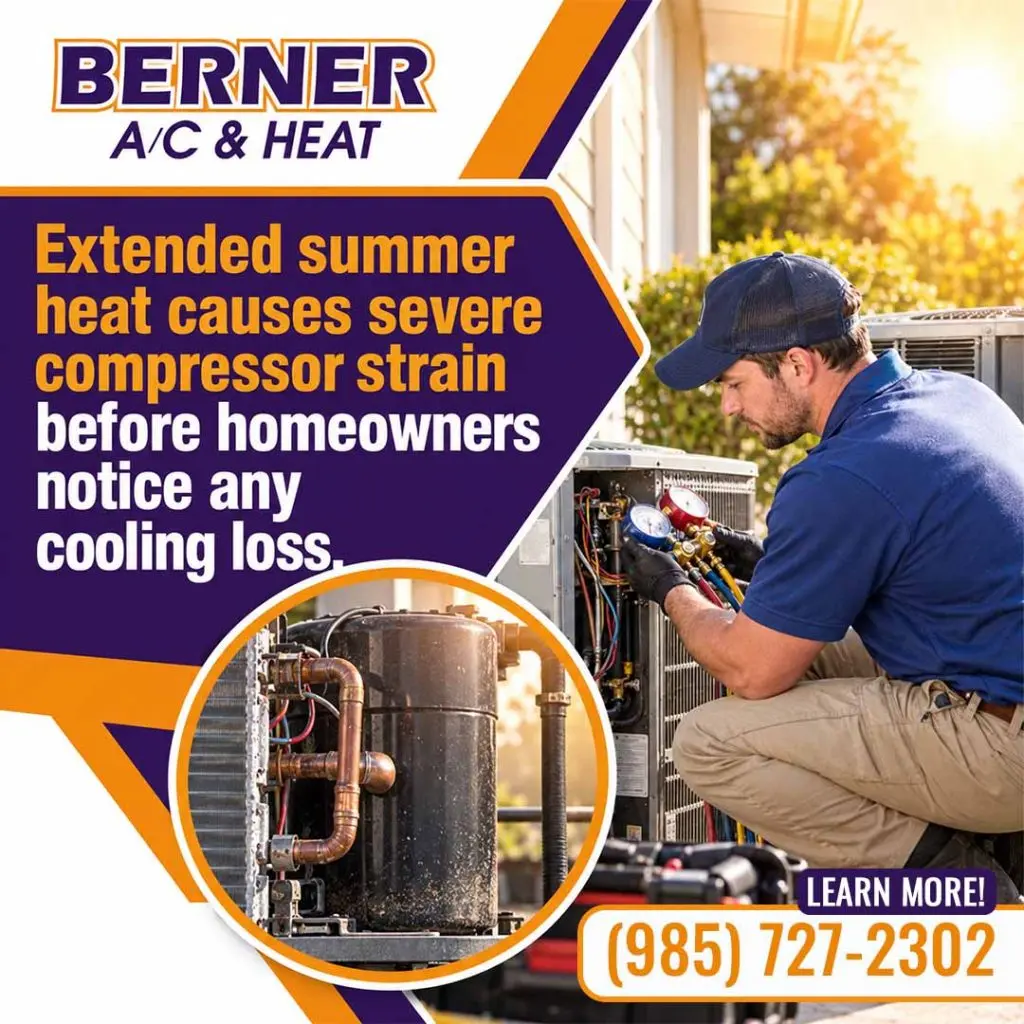
Summer heat quietly stresses compressors, coils, and refrigerant lines, forcing your system to work harder while it loses efficiency. At Berner A/C & Heat, we regularly find heat-related wear that homeowners never notice until bills spike or comfort drops, and prompt HVAC services can catch it early.
Homeowners often assume their HVAC system is fine as long as cool air is still coming through the vents. In reality, extended summer heat can cause damage long before a system fully breaks down, and that damage builds quietly in the background.

What Kind of Damage Does Summer Heat Cause to HVAC Systems?
Extended heat forces the compressor, the hardest-working part of the system, to run longer cycles under greater pressure, and that strain shows up in several ways:
- Overheated compressor components from extended run cycles
- Refrigerant leaks caused by pressure buildup
- Worn or damaged electrical contacts
- Dirt and debris collecting faster on coils, restricting airflow
Routine HVAC maintenance during peak season helps catch these issues before they turn into a full breakdown.
Why Compressors and Coils Are Most at Risk
The compressor and outdoor coil sit outside, absorbing direct heat while also managing the heat pulled from inside the home. That dual exposure is why these two components fail more often in July and August than any other time of year.
How Can You Tell Your HVAC Has Heat-Related Damage?
Some signs are obvious, like warm air or a system that won’t turn on. Others are subtler and easy to miss.
| Symptom | Normal Operation | Sign of Heat Damage |
| Airflow | Steady and consistent | Weak or uneven across rooms |
| Cycling | Regular on/off pattern | Short cycling or running constantly |
| Sound | Quiet hum | Clicking, buzzing, or grinding |
| Energy bill | Predictable monthly range | Sudden, unexplained increase |
| Cooling | Even temperature throughout | Hot spots or slow cooling |
Why Does Local Heat and Humidity Add Extra Strain?
Systems here don’t just deal with high temperatures. They also fight humidity, which makes the compressor and coils work harder to remove moisture from the air. Berner Air Conditioning & Heating sees this pattern often in homes across the area, which is one reason locally tuned HVAC services in Mandeville, LA, differ from a one-size-fits-all approach. As an HVAC company familiar with the region’s climate swings, we factor humidity load into every inspection.
A few local conditions that add extra wear:
- Long stretches of high heat with little overnight cooldown
- Elevated humidity that increases dehumidification demand
- Heavier pollen and debris buildup on outdoor coils
- Extended run times compared to milder climates
How Do Professional Repairs Restore Efficiency After Summer Damage?
Repairs restore efficiency by fixing the specific components under strain, not just addressing the symptom. Cleaning coils restores airflow, sealing refrigerant leaks restores cooling capacity, and replacing worn electrical parts prevents a small issue from becoming a costly failure. HVAC accounts for more than half of a typical home’s energy use- 52%, according to the U.S. Energy Information Administration- so even a modest efficiency loss from heat damage shows up fast on a monthly bill.
Our HVAC services focus on restoring the system to its original efficiency rather than a temporary fix. Consistent HVAC maintenance afterward helps prevent the same damage from recurring next season.
Frequently Asked Questions
Does running the AC constantly in summer damage the unit?
Extended run times alone aren’t harmful, but combined with dirty filters or low refrigerant, constant cycling accelerates wear on the compressor.
How long does heat-related HVAC damage take to show up?
It varies, but many homeowners notice symptoms four to six weeks into a heat wave, once components have been under sustained stress.
Can a dirty air filter cause heat-related damage?
Yes. A clogged filter restricts airflow, which makes the system work harder and increases strain on the compressor during hot weather.
Is heat damage covered under a standard HVAC warranty?
Coverage depends on the manufacturer and whether the system was properly maintained, so it’s worth checking your specific warranty terms.
Ready to Check Your System Before Damage Spreads?
A quick inspection now can catch heat-related wear before it turns into a bigger repair. Contact our team at Berner Air Conditioning & Heating at (985) 727-2302 or email tomberner@bernerair.com to schedule a visit and keep your comfort steady through the rest of the season.
