
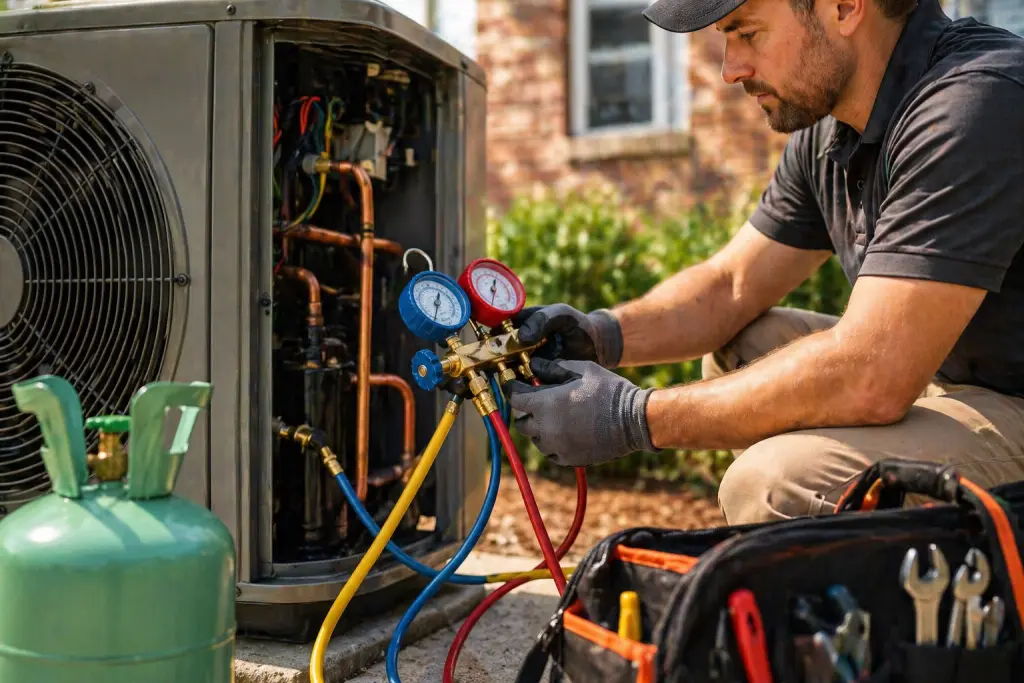
Refrigerants play a central role in how an air conditioning system produces cool air. It transfers heat from indoor spaces to the outdoors through a continuous cycle of pressure and temperature changes. When refrigerant levels or flow are not correct, cooling performance drops and system strain increases, often leading to the need for AC repair or full system service.
Berner A/C & Heat provides professional AC repair in Mandeville, LA, and supports homeowners who experience cooling issues linked to refrigerant performance. Reliable services help identify leaks, restore correct refrigerant levels, and return the system to proper operation. Understanding how refrigerant works helps homeowners recognize early signs of system issues and take action before larger HVAC problems develop.
What Refrigerant Does in an Air Conditioning System
Refrigerant is the working fluid that allows an air conditioning system to move heat out of indoor spaces. It circulates through a sealed loop and changes pressure and state as it passes through system components. Refrigerant flow and behavior are commonly reviewed to identify cooling problems and system inefficiencies.
Heat Transfer Function
Refrigerant absorbs heat from indoor air as it passes through the evaporator coil. This process removes heat from the living space and transfers it into the refrigerant. The heated refrigerant then travels through sealed copper lines toward the outdoor unit.
Once it reaches the condenser coil, the heat is released outside. This cycle allows the indoor environment to cool as heat is continuously removed from the air inside the home.
Cooling issues often appear when this heat transfer process is disrupted. Low refrigerant levels, leaks, or restrictions can reduce how efficiently heat moves through the system. The air conditioner may still run, but cooling becomes weaker and uneven across rooms.
Cooling Cycle Function
The cooling process depends on the refrigerant changing between liquid and gas states. Inside the evaporator coil, refrigerant absorbs heat and turns into a gas. It then moves to the compressor, where pressure increases. After that, it flows to the condenser coil, releases heat outdoors, and returns to a liquid state. This cycle repeats during operation.
When refrigerant levels or pressure balance shift, the cycle slows down. Common results include longer cooling times, reduced airflow strength, and inconsistent room temperatures. System checks focus on how each stage of this cycle is functioning to restore steady cooling performance.
How Refrigerant Moves Through the System
Refrigerant follows a repeating path through the air conditioning system to manage indoor heat. Each stage of this movement depends on pressure changes and controlled flow between major components. In AC repair services, this cycle is reviewed to locate performance issues that affect cooling output.
Evaporation Process
Refrigerant absorbs indoor heat and turns into a gas inside the evaporator coil, a key focus in AC repair diagnostics. Warm indoor air passes over the evaporator coil, where refrigerant absorbs heat from the air. As it absorbs energy, it changes from a low-pressure liquid into a gas. This stage removes heat from the indoor environment and begins the cooling process.
If this step is not working correctly, cooling performance drops quickly. Low refrigerant levels or restricted airflow can reduce how much heat is absorbed. During system checks, this stage is reviewed to confirm that the coil is handling heat exchange properly.
Compression and Heat Release
After leaving the evaporator coil, refrigerant enters the compressor. Pressure and temperature rise as the gas is compressed. This prepares the refrigerant to release heat at the outdoor unit. The heated refrigerant then flows into the condenser coil.
Outdoor air helps remove heat, turning the refrigerant back into a liquid. Any issue in this stage can lead to weak cooling and longer system run times. Service checks often focus on compressor performance and heat release efficiency.
Expansion Stage
Before returning to the evaporator coil, refrigerant passes through an expansion device. This step lowers pressure and temperature, preparing it to absorb heat again inside the home. If this stage is restricted or not functioning correctly, the cycle becomes unbalanced. Cooling may feel uneven or slow. During system inspections, this stage is checked to confirm smooth flow back into the indoor coil so the cycle can continue without interruption.
Types of Refrigerants Used in Air Conditioners
Air conditioning systems rely on different refrigerants depending on the system age, design, and regulatory standards. Each type behaves differently under pressure and temperature changes, which affects system performance. Identifying the refrigerant type helps guide repair methods and service decisions.
R-22 and R-410A Systems
Older systems use R-22, while many existing units use R-410A, which is being phased down and often addressed in AC repair work. R-22 was widely used in older air conditioning systems. Many of these units are still in operation, but R-22 is no longer produced for new equipment. Systems that rely on it often face challenges during repairs due to limited availability.
R-410A is found in many newer residential systems. It handles higher pressure levels compared to older refrigerants and supports stronger cooling performance in compatible units. Over time, R-410A is also being phased down, which affects long-term servicing options.
Identifying whether a system uses R-22 or R-410A is part of standard diagnostics. It helps determine repair approaches, replacement considerations, and refrigerant handling requirements during service.
R-32 and R-454B Refrigerants
Newer HVAC systems use R-32 and R-454B for updated efficiency and compliance standards. These refrigerants operate with a lower environmental impact compared to older types.
R-32 offers strong heat transfer capability, while R-454B is designed as a replacement option for systems transitioning away from older blends. Both are used in modern equipment that requires specific handling and charging procedures.
Working with these refrigerants requires proper system matching and careful service practices. Each refrigerant type must be handled according to manufacturer specifications to maintain consistent cooling performance and system reliability.
Signs of Refrigerant Issues in an Air Conditioner
Refrigerant problems often appear through changes in cooling output or visible system conditions. These signs usually develop when heat transfer inside the system is affected, or pressure levels are no longer balanced. Early attention helps reduce strain on components and supports steady cooling performance.
Cooling Performance Problems
Cooling issues linked to refrigerant can show up in several ways:
- Air from vents feels warmer than the set temperature
- Cooling takes longer to reach the desired indoor comfort levels
- The system runs for extended periods without stabilizing the room temperature
- Airflow feels weaker even when the blower is operating normally
- Some rooms cool unevenly compared to others
These conditions often point to reduced refrigerant levels or restricted flow inside the system. When refrigerants cannot absorb and move heat properly, the cooling cycle slows down and performance drops across the entire unit.
Physical System Symptoms
Refrigerant issues may also appear through visible or audible signs, such as:
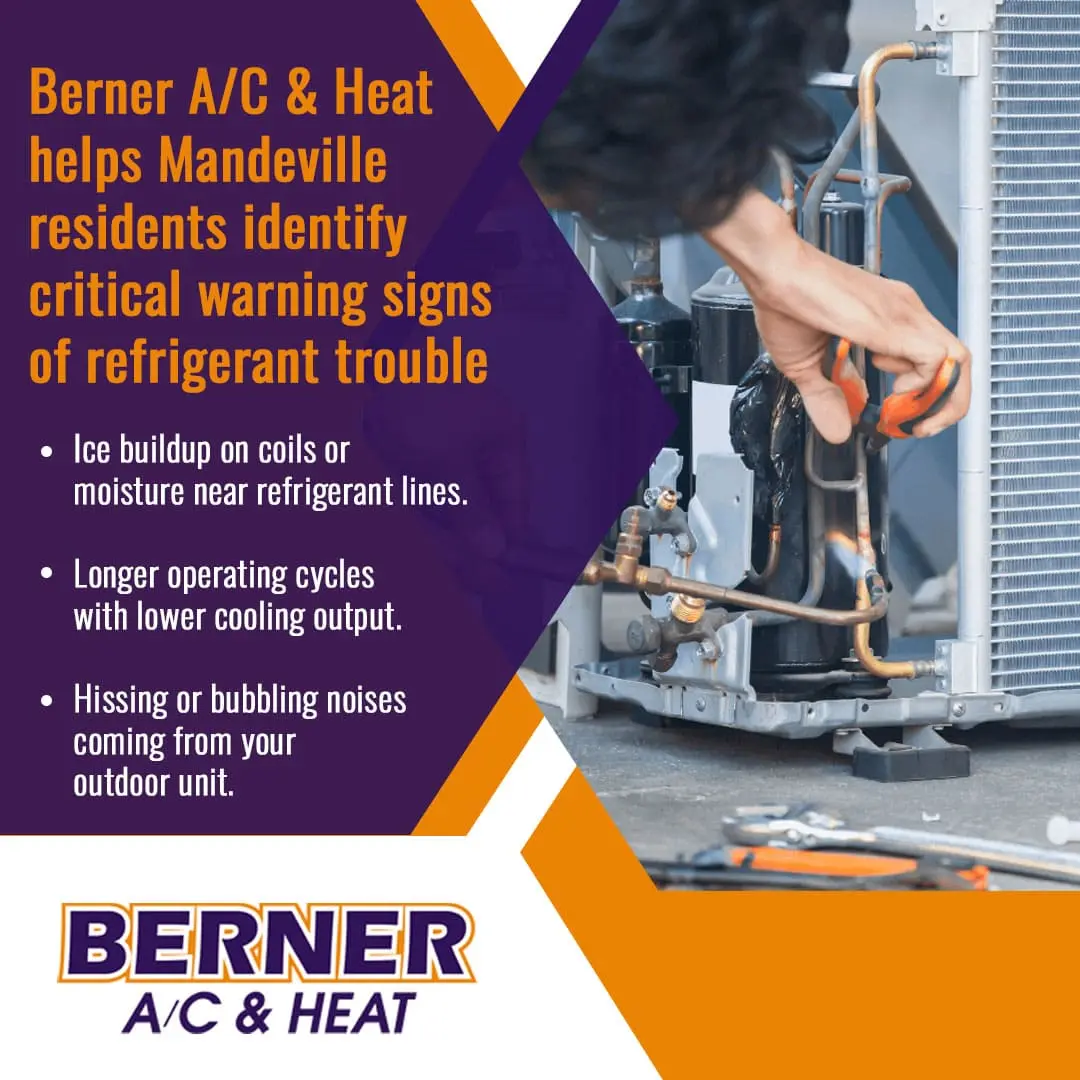
- Ice forming on the evaporator coil or refrigerant lines
- Frost buildup that returns even after system restarts
- Hissing or bubbling sounds near indoor or outdoor units
- Moisture or unusual condensation around copper lines
- Sudden drops in cooling output without thermostat changes
Ice buildup usually indicates poor heat exchange or restricted airflow, while hissing sounds often point to refrigerant leaks or pressure loss within the sealed system. Both conditions require inspection to locate the source of the imbalance and restore normal system operation.

Role of Berner Air Conditioning & Heating in Refrigerant and AC Performance
Berner Air Conditioning & Heating explains refrigerant behavior and system performance to help homeowners better understand cooling issues. The focus stays on identifying problems early, correcting system faults, and restoring consistent operation through structured HVAC service.
AC Repair and Refrigerant Service
Berner Air Conditioning & Heating provides AC repair in Mandeville, LA, along with refrigerant services throughout nearby areas. The company explains that refrigerant is central to cooling performance, and many service calls involve symptoms such as weak airflow, warm air from vents, or uneven cooling between rooms.
During service visits, our team explains how refrigerant levels, leaks, or flow restrictions can affect heat transfer inside the system. Work typically includes residential AC repair, refrigerant level checks, leak detection, and system inspections. Each step is communicated clearly so homeowners understand how the issue connects to overall system performance and why specific AC repair services are needed.
System Diagnostics and Repair Work
Berner Air Conditioning & Heating explains that diagnostics focus on locating where refrigerant loss or pressure imbalance begins. The process includes pressure testing to evaluate system balance and leak detection to identify refrigerant escape points within coils or line sets.
The company also explains how restricted airflow, coil conditions, or internal blockages can affect cooling output. Once the issue is identified, repair work is carried out to restore proper refrigerant flow and stabilize system performance. Each step is explained before work begins, so the process remains clear and easy to follow.
HVAC System Installation Support
Berner Air Conditioning & Heating explains that newer HVAC systems are designed for refrigerants such as R-32 and R-454B, which support updated performance requirements. These systems are selected and installed based on home size, cooling demand, and compatibility with modern refrigerant standards.
The installation process includes system setup, component matching, and post-installation testing. Our team explains how proper installation supports stable cooling cycles and reduces the likelihood of refrigerant-related issues over time.
Customer Service Approach
Our technicians explain every stage of service before work begins, from diagnosis to repair recommendations. Homeowners are informed about the issue found, what is causing it, and what steps will be taken to correct it.
Pricing details are shared upfront, and service options are discussed clearly. This approach supports transparency in repair services and helps homeowners understand how refrigerant and system performance are being addressed throughout the service process.
Book AC Repair in Mandeville, LA
Berner Air Conditioning & Heating provides AC repair in Mandeville, LA, focused on refrigerant issues, cooling performance, and system reliability. For service requests, contact the team at (985) 727-2302 or email tomberner@bernerair.com. Prompt service helps restore steady cooling and prevents added strain on the system.
